Cribbage Classic - Card Game
- 4.8
- Rating
- 100.00K
- Installs
- Free
- Price
 Analysis by App-foxy
I spent time with Cribbage Classic as a compact card game for Android, and my first impression was clear: it is aimed at people who already enjoy cribbage or want a focused way to learn the rhythm of the game. It does not try to be a broad card-game collection. Its identity is much narrower, which is a strength when you want cribbage specifically and a limitation when you are looking for variety.
The game comes from FunCraft Games and is listed as a free title in the card category. It has reached more than fifty thousand installs and holds a 4.8 average from around 2.6 thousand ratings, with roughly 170 written reviews. Those numbers suggest that the people who find it are generally happy with the experience, although I would not treat popularity alone as proof that it suits every kind of player.
My review focuses on the practical question I would ask before installing it for a friend: does this give you a worthwhile cribbage table without asking you to pay up front, and are the compromises acceptable if you only want a traditional card game?
You May Also Like

 Blood Strike: 2.5 Anniversary
Blood Strike’s Loadouts Turn Every Drop Into a Tactical Gamble
A close look at Blood Strike’s custom loadouts: how fast access to signature weapons reshapes its battle royale rhythm, rewards preparation, and narrows the gap between fights.

 Pandora - Music & Podcasts
Pandora’s Music Is Easy to Start, but Harder to Recover
Pandora’s strength is its low-effort path from a seed to a station. Its weak spot is how much confidence it asks you to place in connection, setup, and quiet recovery.

 8 Ball Pool
 Is Built on Rivalries, Rematches, and Routine
A close look at the rivalries, rematches, shared routines, and unanswered safety questions that turn a quick pool match into a persistent mobile community.

 Samsung Music
’s Quiet Strength Is Playing What You Already Own
Its reach comes less from spectacle than from dependable access to a personal library. That simplicity is both the app’s strongest retention engine and its ceiling.

 AccuWeather: Weather Radar
AccuWeather Review: A Quick, Clear Forecast for Everyday Decisions
For everyday plans, the best forecast is the one you can understand quickly. AccuWeather makes rain timing, radar, and local conditions easy to act on, with a few trade-offs.

 Hill Climb Racing
Why Hill Climb Racing Still Turns Crashes Into One More Run
A tiny car, a bumpy hill and one more upgrade: Hill Climb Racing keeps resurfacing because its simple chaos makes every near-miss feel personal.
More From Our News Desk
View All News


What playing it feels like in everyday use
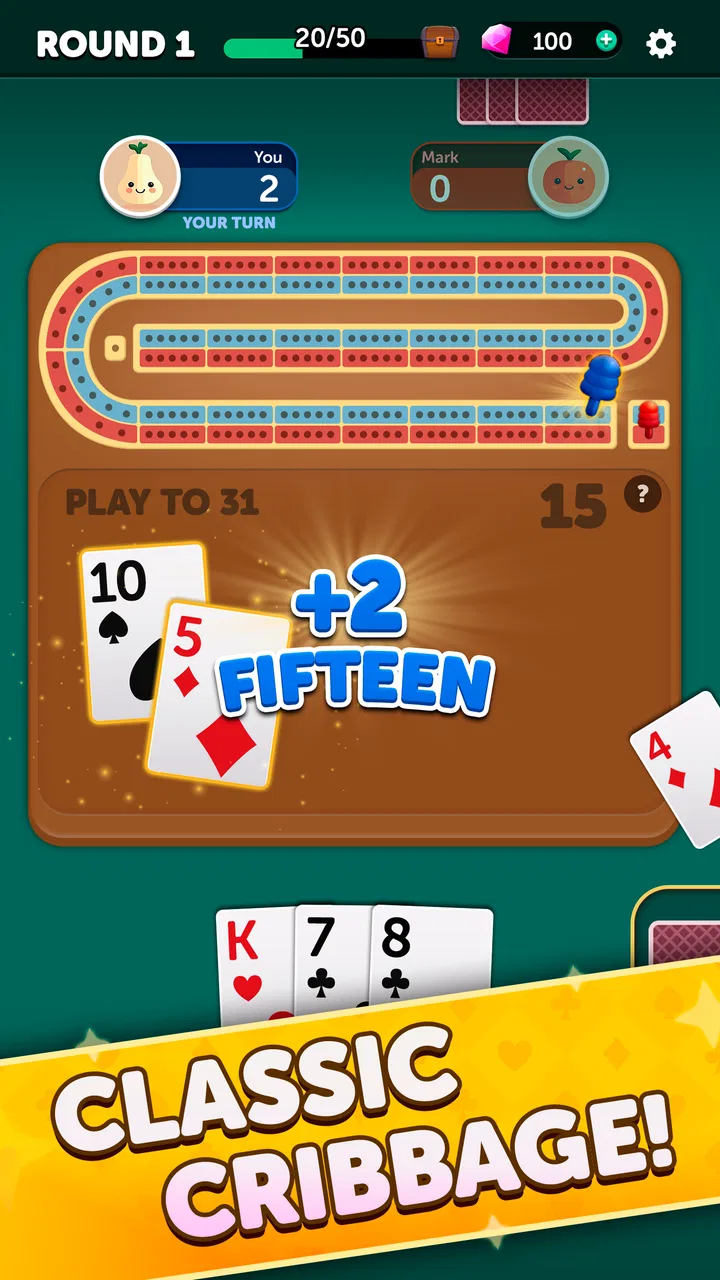
Cribbage is a game where small decisions matter more than flashy presentation. You choose which cards to keep, decide what to place in the crib, and then try to build the best scoring opportunities during play. That makes a digital version useful in situations where setting up a physical board is inconvenient. I found it particularly suitable for a short break, a commute with a stable connection or a quiet evening when I wanted something thoughtful without the commitment of a large strategy game.
The important point is that the appeal comes from the card decisions themselves. A hand that looks ordinary can become valuable through pairs, runs and combinations, while a tempting discard can also give the opponent a useful crib. I like that this creates a natural reason to replay a hand: even when the result is disappointing, there is usually something to reconsider in the discard or play sequence.
For someone new to cribbage, the scoring can feel less obvious than in familiar games such as Solitaire or standard rummy. The board-style scoring and the separate crib require attention, especially when you are trying to understand why a hand earned a particular result. I recommend learning one scoring idea at a time rather than trying to memorize everything immediately. First watch how the hand and crib are counted, then pay attention to the running total during play.
A useful habit is to pause mentally before discarding. Do not simply keep the cards with the highest individual values. Look for pairs, connected ranks and combinations that can work together. At the same time, consider what your discard might offer the other side. That second question is where many beginner games are decided, and it is also where the app can become more interesting after the basic rules stop feeling unfamiliar.
Free access and the real value question
The game is free to download, so the initial decision is easy: you can try the core experience without committing money first. That matters for cribbage because the game’s appeal is personal. Some players enjoy the slow calculation immediately, while others find the scoring too specialized. Free access lets you discover which group you belong to.
There are in-app purchases priced from $0.49 to $49.99 per item. I would therefore judge the value in two stages. The free entry is the main advantage for a curious player, while any later purchase should be considered optional value rather than part of the basic cost. I would not spend simply because a purchase is available; I would first decide whether the regular play experience has earned a place on my phone.
This distinction is important for families and casual users. The content rating is Everyone, which makes the game broadly approachable from an age-rating perspective, but a child who has never played cribbage may still need an adult to explain the rules. The rating describes suitability, not automatic understanding. For teaching, I would sit beside a new player for the first few rounds and explain the scoring decisions in plain language.
The current version is 1.2.25659, and the game supports Android 7.0 or later. That makes it accessible on many older Android devices, although compatibility alone does not tell you how comfortable the game will feel on every screen. On a small display, card selection and score reading deserve more attention than they would on a tablet. I would test the free version on the device you plan to use before considering any purchase.
Where the game delivers genuine value
The strongest value is concentration. A traditional cribbage match gives you something to think about without requiring a long story campaign, a large download of content or a complicated collection system. I can open it when I want a structured mental break, make decisions for a few hands and stop without feeling that I have abandoned a larger objective.
It also works well as a practice partner. A physical cribbage board is excellent for playing with another person, but it is not always available. A mobile opponent gives you a way to rehearse discarding and counting when nobody else is around. That is especially useful for a returning player who remembers the broad rules but has become rusty with the details.
One of the less obvious benefits is that digital play exposes your mistakes more clearly than a rushed physical game can. When I make a poor discard, I can connect the result to the decision instead of blaming a messy table or a forgotten score. After several sessions, I start noticing patterns: keeping a visually attractive group is not always correct, and protecting the opponent from a strong crib can be as important as improving my own hand.
Another practical use is learning to count after the fact. Before checking the result, try to estimate the value of your hand and crib. Then compare your estimate with the game’s calculation. This turns ordinary matches into a low-pressure scoring exercise. It is a better use of the app than tapping through rounds without thinking, particularly if your goal is to become competent at a real cribbage table.
Tradeoffs that affect the experience
The narrow focus is the first tradeoff. If you want solitaire, hearts, spades or a collection of unrelated card games, this is not the efficient choice. Installing a general card-game app may give you more variety, while a physical deck and board may be better if your priority is social play. This title makes sense when cribbage itself is the reason you are opening the app.
There is also a difference between playing digitally and playing with people in the same room. A phone can replace the board and handle the arithmetic, but it cannot replace conversation, table talk or the satisfaction of teaching someone face to face. I would use the app to practice or fill a gap, not as a complete substitute for a friendly physical match.
The free model deserves a measured view. Being free to start is valuable, but the presence of purchases means some users will want to understand what they are paying for before spending. Since the purchase range runs from a small amount to a much larger one, I would avoid treating every available item as automatically necessary. The sensible approach is to enjoy the no-cost access first and only pay if a specific addition solves a problem you actually have.
Cribbage itself can also be the friction point. Players who prefer quick visual rewards may find the hand evaluation and careful discard decisions slower than a simple matching game. The game asks you to think in combinations and probabilities rather than merely react. That is exactly why I enjoy it, but it is also why I would not recommend it to someone who wants a completely effortless time-killer.
Beginners should expect a learning curve even if the controls are straightforward. Knowing which cards are valuable is not the same as understanding why. A new player can lose while making reasonable choices simply because the scoring system has not become intuitive yet. I see that as a property of cribbage rather than a flaw unique to the app, but it still affects whether the game feels welcoming during the first session.
Three ways I would get more from it
First, I would separate practice sessions by skill. In one session, focus only on choosing a discard that improves your own hand. In the next, give more attention to limiting the opponent’s crib. Trying to optimize both immediately can make every decision feel uncertain. Separating them helps reveal which part of the game is causing mistakes.
Second, I would use a prediction routine. Before the hand is counted, estimate your likely score. Before the crib is revealed, decide whether your discard was safe or generous. This creates a feedback loop that a generic card-game description would not tell you about. The app becomes not just entertainment but a way to build reliable counting instincts.
Third, I would avoid judging my ability from a single match. Cribbage includes enough card variation that one unlucky sequence can hide good decisions, while a fortunate hand can make weak play look clever. I prefer reviewing several hands and asking whether my choices were sensible at the time. That mindset keeps the game strategic without turning a casual session into a frustrating test.
A fourth tip is useful for people sharing a device. Let each player state the intended discard before tapping it. This prevents accidental selections and turns the app into a teaching tool. It also makes a solo game more social if two people are comparing decisions while the phone handles the bookkeeping.
Who will get the most value
I think the best audience is a player who already knows cribbage, enjoys traditional card games and wants a convenient digital table. It is also a good fit for someone who has heard of cribbage but wants to learn privately before playing with friends. The free starting point lowers the risk of discovering that the scoring style is not for you.
Older Android users may appreciate the stated support for Android 7.0 and later, especially if they do not want to replace a working phone just to try a small card game. Still, I would keep expectations realistic: broad operating-system support does not turn a phone into a comfortable tabletop display. A larger screen will generally make score tracking and card selection easier for anyone with reduced vision or less patience for tiny interface elements.
I would also recommend it to people who enjoy repeatable games rather than constant novelty. The satisfaction here comes from improving decisions, not from unlocking a new genre every few minutes. If you like returning to the same rules and gradually seeing patterns, the focused design is an advantage.
On the other hand, I would skip it if your main goal is multiplayer conversation around a physical table, a broad collection of card games or a very fast round structure. I would also be cautious if you dislike learning unusual scoring systems. A simpler matching or shedding game will provide quicker understanding, while a physical cribbage set will provide a more social experience.
My final recommendation
My verdict is positive, with a clear condition: install it if you specifically want cribbage, not merely any card game. FunCraft Games has positioned this as a focused way to play a classic ruleset, and the free access makes trying it sensible. The 4.8 average and strong rating volume support the impression that it is landing well with its intended audience, though they should be read alongside your own preference for this style of play.
I would begin without spending anything, play enough hands to understand the discard and crib decisions, and only then consider whether an in-app purchase offers value for my particular use. The free starting point is the strongest part of the cost proposition; paid value depends on whether the available purchase is meaningful to you rather than merely available.
For me, the app works best as a quiet practice partner and a convenient replacement for carrying a board. It does not replace the warmth of playing across a table, and it is not the right answer for someone seeking variety. But if you want a dedicated cribbage experience on a compatible Android phone, Cribbage Classic is an easy recommendation to try first, especially when the alternative is not playing at all because the physical game is out of reach.
FAQs for Cribbage Classic - Card Game
01What is Cribbage Classic - Card Game?
Cribbage Classic is a digital version of the traditional card game Cribbage, offering both single and multiplayer modes. It features intuitive gameplay, helping both beginners and experienced players enjoy and improve their skills. The app includes tutorials, hints, and adjustable difficulty levels, making it accessible for all skill levels.
02Is Cribbage Classic available for both Android and iOS?
Yes, Cribbage Classic is available for download on both Android and iOS platforms. You can find it on the Google Play Store for Android devices and the App Store for iOS devices. The app is free to download, with optional in-app purchases for additional features.
03Does Cribbage Classic offer tutorials for beginners?
Absolutely! Cribbage Classic includes comprehensive tutorials designed for newcomers to the game. These tutorials cover the basics of Cribbage, including scoring rules and strategies. The app also offers hints during gameplay to help beginners improve their skills gradually.
04Can I play Cribbage Classic offline?
Yes, Cribbage Classic allows you to play offline. You can enjoy solo games against AI opponents without an internet connection. However, if you wish to play multiplayer matches or access leaderboards and other online features, an internet connection is required.
05Are there any in-app purchases in Cribbage Classic?
While Cribbage Classic is free to download and play, it does offer in-app purchases. These purchases typically include features such as ad removal, additional themes, or other enhancements to improve the overall gaming experience. Purchases are optional, and the core game remains fully accessible without them.
Pros
- Engaging and intuitive gameplay.
- Multiple difficulty levels.
- Offline mode available.
- Detailed statistics tracking.
- Free with minimal ads.
Cons
- Limited customization options.
- Lacks multiplayer feature.
- Occasional app freezes.
- Outdated interface design.
- No tutorial for beginners.

Cribbage Classic - Card Game
Gallery